Understanding Aphasia: Causes, Treatment, and the Role of Speech Therapy in Recovery
What is Aphasia?
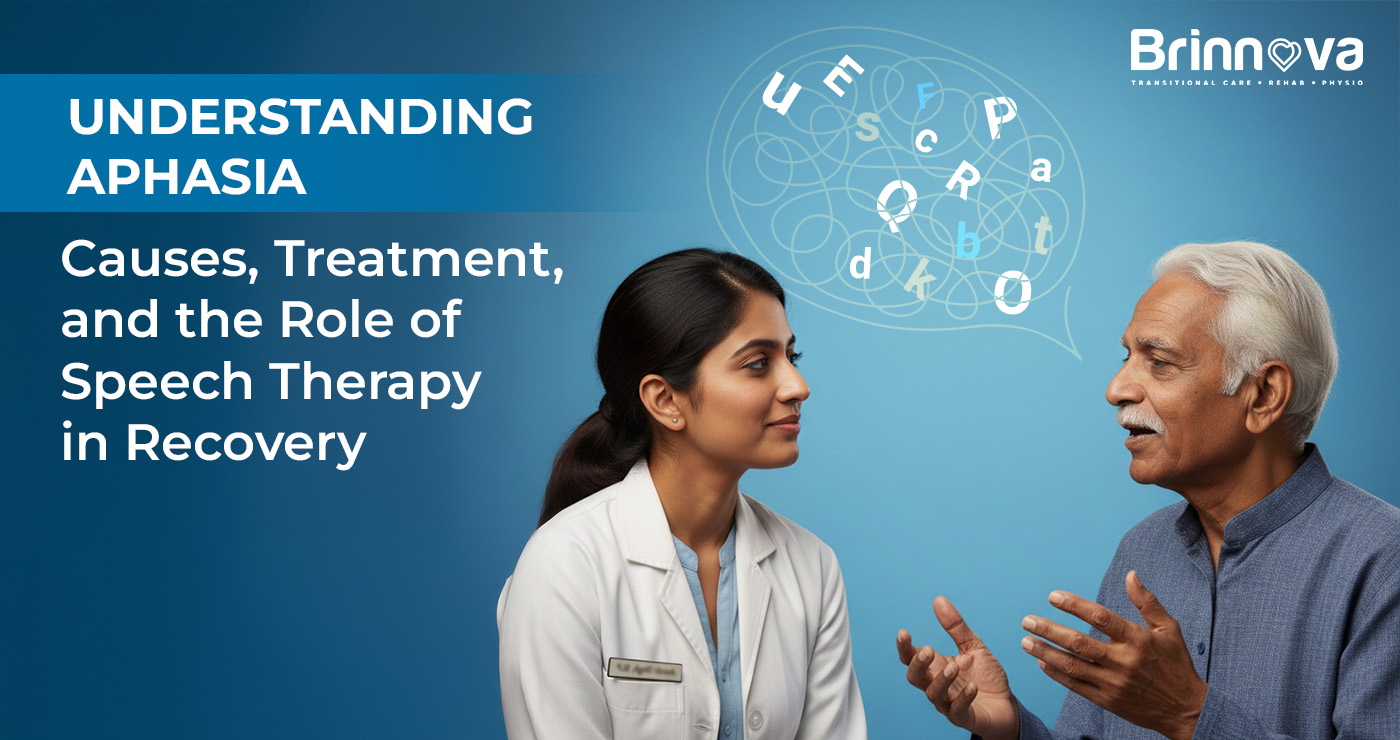
Aphasia is a language disorder that impacts one’s ability to speak and understand what others speak. Apart from verbal communication, it also disrupts one’s ability to read and write. Aphasia merely impacts our ability to communicate and comprehend others, and our overall intelligence remains intact. In most cases, this condition is a byproduct of a stroke that damages the language centers of our brain. Traumatic head injuries, brain tumors, infections, and certain neurological conditions can also cause this condition.
Key Characteristics of Aphasia:
- Struggles to find appropriate words while conversing
- Problems grasping spoken or written language
- Difficulties with reading
- Difficulties with spelling and writing
- Unimpaired intelligence and cognitive skills
- Emotional distress and frustration caused by communication barriers
Types of Aphasia
Aphasia varies based on the specific brain region impacted. A proper treatment plan can be established by the doctors after understanding the specific type of aphasia.
Broca's Aphasia (Expressive Aphasia):
Broca's aphasia patients find it difficult to speak fluently, but their language comprehension is relatively intact. They tend to use short, broken sentences and struggle to articulate complete thoughts verbally. For example, a person may say “walk dog” while attempting to convey “I need to walk the dog.”
Wernicke's Aphasia (Receptive Aphasia):
This type of aphasia involves fluent speech that is often devoid of meaning. Those who have Wernicke's aphasia produce lengthy nonsensical sentences, combine words that have no connection to each other, and find it difficult to comprehend spoken language. They do not realize that others find their speech incomprehensible.
Global Aphasia:
The most serious type, global aphasia, has a major impact on both expression and understanding. People experience considerable challenges in speaking, understanding, reading, and writing. This usually stems from harm to extensive regions of the brain's language centers.
Common Causes of Aphasia
Identifying the causes of aphasia helps in its prevention and charting treatment strategies. The condition arises from injury to the areas of the brain responsible for language processing, which are usually found in the left hemisphere.
Stroke
The majority of aphasia cases are due to stroke. If blood circulation to the brain is halted, brain cells in the impacted region may die, which could harm language centers. Aphasia's type and severity are determined by how much damage the stroke caused and where it occurred.
Traumatic Brain Injury:
Traumatic brain injuries that affect language areas can result from accidents, falls, or head trauma. People who are injured in accidents, those who suffer from serious head injuries, and sportspeople are exposed to danger. Often, the prognosis is contingent on how severe the injury is and how quickly treatment is administered.
Brain Tumors and Infections:
- Tumors growing in or near language centers can cause aphasia
- Brain infections like encephalitis may damage language areas
- Abscesses or inflammation affecting the brain
- Conditions requiring surgical intervention
Progressive Neurological Conditions:
For some people, primary progressive aphasia arises due to neurodegenerative conditions such as frontotemporal dementia or Alzheimer's disease. This type of aphasia develops and deteriorates gradually over time, in contrast to stroke-related aphasia.
Temporary Causes:
Severe migraine attacks can cause temporary language problems. Apart from this, seizures can also cause temporary confusion and communication difficulties. These usually resolve after the underlying condition is treated.
Symptoms of Aphasia
Recognizing aphasia symptoms early allows for quicker intervention and improved outcomes. Symptoms differ according to the type and severity, but typically include challenges in language comprehension and expression.
Speaking Difficulties:
Aphasia often causes people to have difficulty with word recollection, leading them to use incorrect words or invent nonsensical terms. They may talk using incomplete sentences and struggle to create grammatically correct phrases.
Comprehension Challenges:
- Struggling to grasp verbal exchanges
- Difficulty in following complicated discussions or instructions
- Misunderstanding of written content and the ability to understand text when reading
- Misinterpretation of inquiries or demands
Reading and Writing Problems:
Even basic reading can pose challenges, as people find it hard to understand written words or sentences that were once easy for them. Writing is similarly impacted and affected people may struggle with letter formation, correct spelling, and articulating ideas in written form.
Social and Emotional Impact:
The inability to communicate effectively can lead to severe frustration, which often results in social withdrawal, anxiety, and depression. A lot of people with aphasia experience feelings of isolation due to their inability to express their needs or take part in everyday conversations with loved ones.
Speech Therapy Services in Hyderabad Post-Stroke
At Brinnova, our comprehensive speech therapy in Hyderabad helps individuals with aphasia rebuild their communication skills and regain confidence in their daily interactions. Understanding this condition is the first step toward effective treatment and meaningful recovery.
Following a stroke, immediate and intensive rehabilitation is crucial for optimal recovery. Brinnova's specialized speech therapy services in Hyderabad post-stroke provide comprehensive support during this critical recovery period. This involves:
- Initial Assessment and Diagnosis
- Individualized Treatment Plans
- Evidence-Based Therapy Techniques
Brinnova's Comprehensive Approach to Aphasia Treatment
At Brinnova's Centre for Transitional Care in Hyderabad, we offer comprehensive aphasia treatment as part of our specialized neurorehabilitation. Our advanced 50-bed facility provides an ideal setting for intensive therapy and recovery.
If you or someone in your family is facing challenges with aphasia post a stroke or brain injury, reach out to Brinnova's Centre for Transitional Care today. Our speech-language pathologists are prepared to evaluate your needs and create a customized treatment plan that enables you to communicate effectively and live life to the fullest once more.