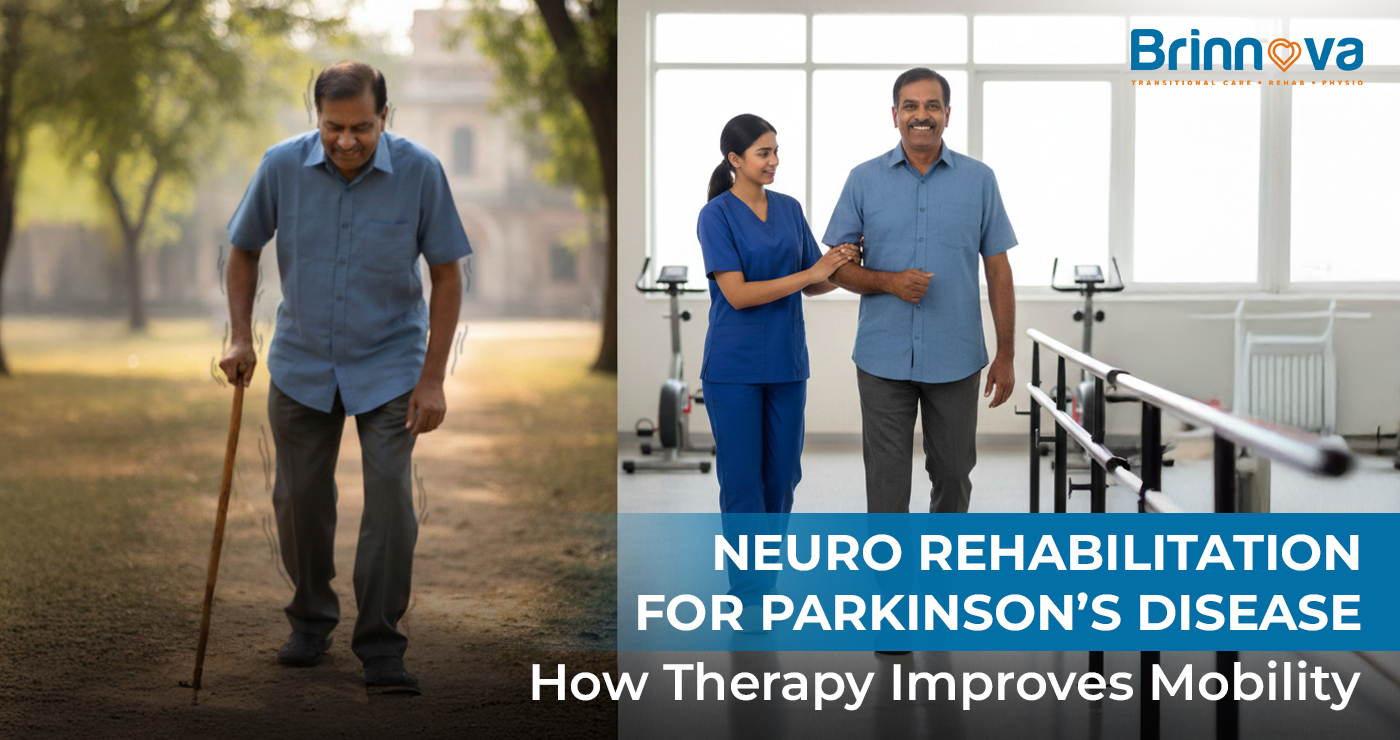
Neuro Rehabilitation for Parkinson’s Disease: How Therapy Improves Mobility
Over time, people with Parkinson’s disease can be impacted to the point that day-to-day movement and balance are compromised. While medicine is a critical part of therapy for symptoms, rehab for parkinson's disease can be equally important in helping people maintain mobility and enjoy their quality of life. Recovery of strength, coordination, and function can be achieved in all stages of disease with "neurological rehabilitation."
This blog post explains how neurological rehabilitation can help people with Parkinson’s disease.It addresses the most common types of therapy and when to start rehabilitation for the fullest benefit.
Understanding Parkinson’s Disease and Its Effect on Movement
Parkinson’s disease is a chronic brain disorder that primarily affects movement and muscle control. Parkinson’s disease results from the brain having too little dopamine, leading to symptoms like tremor, stiff muscles, slowness of movement, poor balance and trouble walking. As these issues progress, they can become a burden in daily life and affect independence, so rehabilitation is an essential part of care.
What Is Neuro Rehabilitation for Parkinson’s Disease?
Parkinson’s disease neurorehabilitation is an advanced type of therapy that focuses on enhancing and restoring mobility, balance, coordination, and functional independence.
Neurological rehabilitation is not the same as an exercise program in that it addresses specific movement issues related to Parkinson’s disease. It employs therapeutic exercises, functional tasks, and movement training to help those experiencing a change in physical condition and who would like to continue participating fully in everyday life.
How Does Neuro Rehabilitation Help Patients With Parkinson’s Disease?
Neuro rehab for people with Parkinson’s disease helps to keep symptoms under control, slow the functional decline and improve them enough to be more confident in their movement. Structured therapy teaches patients ways to reduce tenseness, improve stance and gait, and cope with freezing episodes. Rehabilitation also focuses on building endurance and minimizing chances of falling, in order to walk more safely as well as independently.
What Types of Therapy Are Used in Parkinson’s Disease Rehabilitation?
Parkinson's disease rehabilitation employs multimodal therapy.
Parkinson's disease treatments are physical therapy to improve strength, flexibility and walking; occupational therapy to assist with daily living; speech and swallowing therapy for talking and eating; and balance retraining to lower the odds of falling. These treatments, collectively, provide a comprehensive approach beyond medication.
When Should Rehabilitation Start for Parkinson’s Disease?
It would be ideal to start rehabilitation from the moment of diagnosis of Parkinson’s disease.
Treatment early on enables patients to strengthen, keep mobile and learn strategies for movement before symptoms worsen. Beginning neurological rehabilitation early is important for maintaining your physical function and can help you adapt as the condition progresses.
Can Neuro Rehabilitation Improve Balance and Mobility in Parkinson’s Patients?
Yes, neurorehabilitation is very important for improving balance and walking in general.
By specifically working on balance, posture and gait, patients can enhance stability and decrease their chance of falling. Regular therapy for Parkinson’s patients. Many who are suffering from this disease have had an enhanced speed of walking, smoother motion and higher confidence due to routine care.
Is Rehabilitation Effective in Early Stages of Parkinson’s Disease?
Parkinson’s disease is even easier to cure in its early stages.
12-30% of early-stage patients respond to treatment, with improvements in muscle flexibility, coordination, and functional mobility. With rehabilitation during the neurological phase, independence can be maintained for a long time and supports lifelong physical health.
How Long Should Parkinson’s Patients Continue Rehabilitation Therapy?
Parkinson’s patients benefit from ongoing rehabilitation rather than short-term therapy.
Rehabilitation should be tailored and sustained over time given that Parkinson’s disease is neurodegenerative. Intensity and focus of therapy may vary, but sustained participation in neurological rehab can both support mobility, manage symptoms, and enhance overall quality of life.
Conclusion:
Rehabilitation for Parkinson's Disease Neuro rehabilitation is an important part of overall care for Parkinson’s patients, enabling them to remain mobile, stable and independent throughout the disease. In both early diagnosis and advanced management, rehab for Parkinson’s disease complements medical treatment by promoting physical well-being, confidence, and long-term health.
At the Brinnovacare neuro rehabilitation center, different Parkinson disease specific programmes have been developed. Headed by a team of experienced clinicians, Brinnova focuses on personalised therapy plans and patient-focused care, helping people out-move, live freely, and enjoy life.