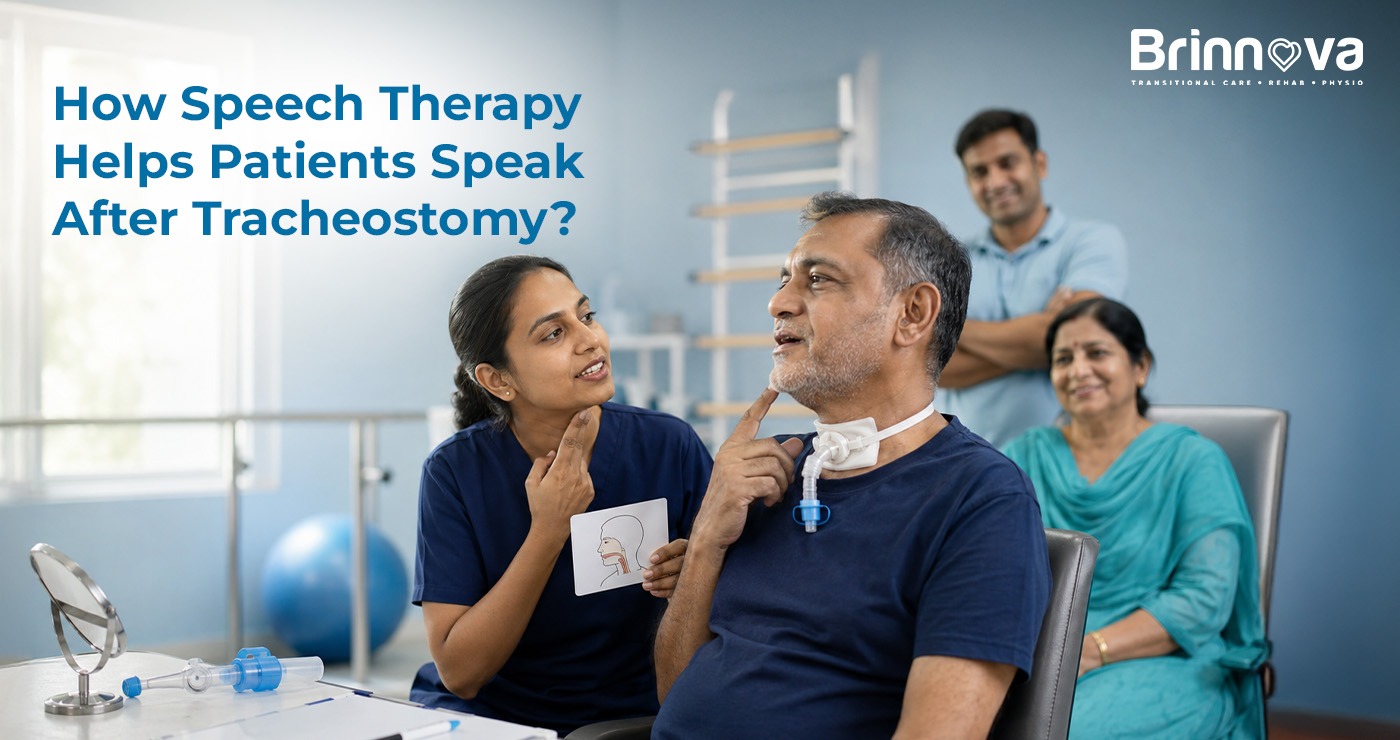
How Speech Therapy Helps Patients Speak After Tracheostomy?
Tracheostomy is a surgical procedure that can be life-saving for breathing problem patients due to injury, surgery or illness. But it not only aids in breathing it also can limit a person's ability to speak and swallow. Losing one's voice post-surgery is oversized for many patients as they feel robbed of their own identity and struggle with the mental pain it brings. This is where Speech Therapy provides the crucial link in recovery.
Patients recover their communication ability and voice quality with adequate speech therapy and rehabilitation for a more fluent interaction scenario providing immense confidence in daily day to day conversations. Speech therapists are right there with patients, teaching them to speak again or helping them recover the strength required for swallowing and rehabilitating.
Understanding Tracheostomy and Its Impact on Speech
Tracheostomy – surgical opening into the neck to place a tube in the windpipe (trachea) Air through this tube goes directly into the lungs, bypassing nose and mouth. The process alleviates breathing, but it can also block the normal movement of air through the vocal cords that is needed for speech to produce.
Patients may experience:
Weak or absent voice
Difficulty controlling airflow for speech
Swallowing challenges
Increased risk of aspiration
Hurdles in communication leading to frustration and emotional distress
This is also the reason why a timely speech therapy input to aid recovery after tracheostomy should be done.
The Role of Speech Therapy After Tracheostomy
Speech Therapy is involved in helping patients achieve safe and effective communication. When a patient with laryngeal cancer first seeks help, their speech-language pathologist examines the breathing and voice production capabilities, swallowing functionality, and communication needs of the individual when designing an individualized rehabilitation plan.
The goals of speech therapy for voice recovery include:
- Restoring verbal communication
- Improving vocal cord function
- Enhancing breath support for speech
- Supporting safe swallowing
- Addressing Communication-related Anxiety
Therapy is done according to the patient's condition, age and recovery progress.
How Tracheostomy Speech Therapy Helps Patients Speak Again?
1. Restoring Airflow Through the Vocal Cords
Speech is when air moves through the vocal cords and makes sounds. Air may completely bypass the vocal cords during a tracheostomy. Even speech therapists have special devices and techniques to help blow airflow backwards so that patients are able to speak again.
These methods may include:
- Speaking valves such as Passy-Muir valves
- Finger occlusion techniques
- Breathing coordination exercises
Patients can regain vocal function progressively through better management of airflow.
2. Breathing and Voice Coordination
After surgery, many patients find it difficult to synchronize breath and speech. Speech therapists utilize controlled breathing exercises to build respiratory support for speech.
Exercises may focus on:
- Deep breathing techniques
- Controlled exhalation
- Voice projection
- Improving speech clarity
These techniques are essential for voice rehabilitation and allow patients to vocalize freely and comfortably.
3. Strengthening Swallowing Muscles
Tracheostomy is associated with reduced mouth and throat muscle movement as well as altered sensation, which can affect swallowing. Swallowing difficulties can lead to a high risk of choking or aspiration pneumonia.
Speech therapists assess swallowing and provide exercises to increase muscle strength and coordination. It is particularly important for safety and recovery of communication.
4. Introducing Alternative Communication Methods
Patients may require transient communication alleviation until majuscule returns. There are speech therapists who will assist the patients in using other communication options such as:
- Writing boards
- Communication apps
- Gesture systems
- Picture boards
- Electronic speech devices
Such tools alleviate frustration and keep patients close to their care providers and important contacts while recovering.
5. Emotional and Psychological Support
Holistic Emotional Well-Being when losing one's ability to speak. Patients may also suffer from anxiety, stress and social isolation. Speech therapists provide rehabilitation, encouragement and help our patients connect emotionally to their journey.
Regaining communication skills often improves:
- Self-confidence
- Social interaction
- Mental health
- Overall quality of life
Importance of Early Speech Therapy Intervention
Conducting speech therapy almost immediately after tracheostomy (as soon as medically feasible) can affect the outcome positively. Intervention at an early stage not only manages the complication but also accelerates recovery.
Benefits of early therapy include:
- Faster restoration of speech
- Reduced muscle weakness
- Improved swallowing safety
- Better patient confidence
- Reduced risk of persistent communication problems
This also reminds us that doctors, nurses, respiratory therapists and speech-language pathologists should work together for the most complete care.
Techniques Used in Speech Therapy for Voice Recovery
Speech therapists utilise multiple evidence based techniques depending on the condition of the patient.
Speaking Valve Training
During exhalation, associated data search improvements enable air to pass a speaking valve through the vocal cords. Safe and effective use of these valves is taught to patients.
Vocal Exercises
This involves exercises that specific muscle groups that aid omit the muscles in our voice.
Swallow Therapy
Selective swallowing exercises can help in improving swallow co-ordination and reducing aspiration risk.
Respiratory Muscle Training
Breathing exercises allow the patient to control airflow and ground them in producing speech.
Communication Counseling
Patients and families are educated about communication strategies as well as what realistic recovery can be expected.
Challenges During Voice Rehabilitation
Tracheostomy recovery is variable between patients. Speech may return to some people swiftly whilst others can need years of therapy. Common challenges include:
- Weak respiratory muscles
- Vocal cord damage
- Neurological conditions
- Fear of speaking
- Fatigue during communication
Voice rehabilitation is dependent on consistent therapy, patience and family support.
Tips for Supporting Recovery at Home
Family and caregivers may assist in the recovery of speech through the following:
Encouraging regular speech exercises
Maintaining proper tracheostomy care
Creating a calm communication environment
Employing visual communication tools only as needed
Attending therapy sessions for guidance
Patients may be spurred on in their recovery through positive reinforcement.
Long-Term Benefits of Speech Therapy
Tracheostomy speech therapy has a long term impact which goes beyond just regular speech. Patients often experience improvements in:
- Communication independence
- Swallowing function
- Social confidence
- Emotional health
- Daily quality of life
Fortunately, besides the medical team and therapy during recovery (which sometimes involves rehabilitation), most patients eventually regain functional speech and are able to perform activities of daily living.
Conclusion
Speech recovery after a tracheostomy is a slow, arduous process in specialized hands. Through specific Speech Therapy patients can better communicate, restore voice functions and feel like themselves again. Voice rehabilitation is critical to normal communication as it involves the coordination of breathing, swallowing help and emotional support.
At Brinnovacare, we know that compassionate rehabilitation and complete tracheostomy care is also essential. Experts are supported to learn that, with specialized therapy plans and sufficient support, they can engender significant recovery of their baseline function and optimize their quality of life.