Struggling with Chronic Back Pain? How Spine Rehabilitation Can Help You Recover
One of the most common health issues that young and older people are encountering these days is backpain. Career or lifestyle choices—working long hours at a desk, having incorrect angles or posture while working, stress and inactivity are all nuggets of contributing factors towards your spine staying in chronic pain. Chronic back pain is the kind that lasts for weeks or months and prevents you from performing your normal activities and tasks like working, sleeping, walking and doing your everyday chores. Neuromechanical therapy is an expanding area where Spine Rehabilitation creates modern somatic treatment protocols that integrate applicable rehabilitation techniques directed at restoring mobility and alleviating musculoskeletal pain.
But anyone can achieve this with proper physiotherapy, exercises that are focused on sore muscles and joints, posture correction along with expert direction.
What Is Chronic Back Pain?
Most importantly, Chronic back pain is defined as a pain that tends to last for more than 12 weeks, and usually continues on even after the injury has healed. Whereas short-term muscle pain is a sign to rest and recover, chronic pain causes day-to-day activities to be challenging to complete, and generally requires specific treatment to deal with.
Note: It can be anywhere from a mild aggravation in the lower back to debilitating spinal cervical or upper back pain. Some have constant stiffness; others experience sharp pains, needles, and knife-like sensations, and a limited range of motion.
Chronic back pain is often caused by:
- Poor posture
- Herniated discs
- Degenerative spine conditions
- Muscle strain
- Sedentary lifestyle
- Obesity
- Sports injuries
- Arthritis
- Sciatica
- Stress-related muscle tension
On prolonging this act of neglect, however the symptoms can worsen with time leading to complications down the road too.
What Is Spine Rehabilitation?
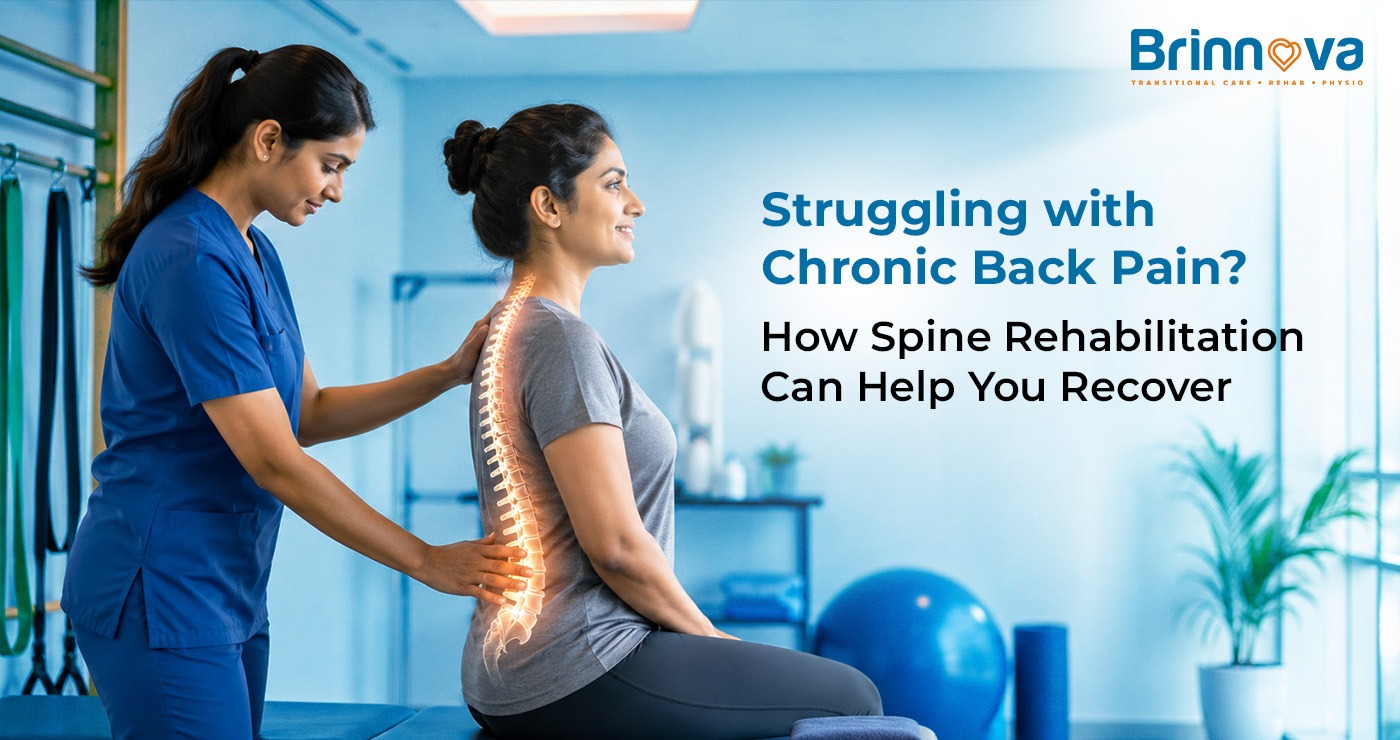
Spine Rehabilitation is a specific type of treatment that aims to decrease spinal pain, enhance motion and support muscles, improve strength and function. He combines medical knowledge and physical therapy methods to allow patients to heal naturally without the heavy reliance on drugs or other surgeries.
A spine rehab program is often customised following the patient, as well as based upon their symptoms, pain levels, age, lifestyle and movement limitations.
The primary aims of spine rehab are:
- Relieving pain
- Improving flexibility and posture
- Strengthening spinal muscles
- Restoring mobility
- Preventing future injuries
- Enhancing overall physical function
This type of treatment is common for finding solutions for people who are undergoing rehabilitation for back pain, spinal injuries, disc problems or re-curring muscle stiffness.
Common Symptoms of Chronic Back Pain
Early identification of the symptoms will help in preventing the complication to become more severe. Basically the most common signs are:
- Persistent lower back pain
- Neck or upper back stiffness
- Pain during sitting or standing for too long
- Muscle tightness
- Difficulty bending or lifting
- Pain radiating to the legs
- Tingling or numbness
- Reduced flexibility
- Weakness in the back muscles
- Disturbed sleep due to discomfort
These signs last for a week or two; visiting a spine specialist as soon as possible is very important.
How Does Spine Rehabilitation Help in Recovery?
1. Reduces Pain Naturally
The biggest advantage of a spine rehabilitation is that it treats the root cause instead of covering symptoms with painkillers.
Techniques therapists use include:
- Manual therapy
- Stretching routines
- Heat and cold therapy
- Muscle strengthening
- Mobility training
These methods offer slow yet permanent relief of the pain in the back.
2. Improves Posture and Spinal Alignment
Bad posture is a key contributor to chronic back issues. The vast majority of people spend hours hunched over phones, laptops, or on an office desk — adding further pressure on the spine.
Posture correction through spine rehabilitation:
- Ergonomic training
- Core strengthening
- Postural correction exercises
- Body mechanics education
Good posture takes stress off the structures of your spine, and helps prevent recurrence of pain.
3. Strengthens Supporting Muscles
Weak muscles around the spine cause the whole area to easily become unstable and painful. Specific spine therapy exercises help to rehabilitate the core, lower back area, hips and other associated muscles.
With stronger muscles, the spine is better supported, and less prone to suffer injury in the future.
Common exercises may include:
- Pelvic tilts
- Bridge exercises
- Stretching routines
- Core stability workouts
- Controlled mobility exercises
These exercises are supervised and safe.
4. Enhances Flexibility and Mobility
Chronic pain often limits movement and causes stiffness. Just things like stretching and flexibility type stuff that gets the patterns of normal movement back under rehabilitation, examples.
Improved flexibility allows patients to:
- Walk comfortably
- Sit longer without pain
- Bend and lift safely
- Perform daily activities more easily
Even mobility really does get better with regular therapy over time!
5. Prevents Future Spine Problems
Rehabilitation for back pain posits another huge benefit. Patients discover safe movement patterns, how to correct their posture, and how to perform daily exercises or stretches that protect the spine sustainably.
It subsequently minimises the risk of re-injury to surfacing pain episodes and helps maintain spinal health for decades.
Role of Physiotherapy for Back Pain
Back pain physiotherapy is one of the best parts of spine rehabilitation. Spine care professionals first assess dysfunctional movement patterns, muscle weaknesses and posture issues trigger pain by creating diplomatic plans.
A physiotherapy program may include:
- Therapeutic exercises
- Manual therapy
- Dry needling
- Electrical stimulation
- Ultrasound therapy
- Posture education
- Strength training
Regular physiotherapy sessions surely help improve mobility, minimise inflammation, and aid natural healing.
Lifestyle Changes That Support Recovery
Apart from rehabilitation, lifestyle change is one such factor which can lead to better recovery results.
Maintain Proper Posture
Do not slouch when sitting or standing. Utilise ergonomic chairs and keep the bone straight.
Stay Physically Active
Light physical activity enhances blood circulation and helps prevent stiffness.
Manage Weight
Extra weight adds stress to the spine and increases pain.
Sleep Correctly
Choose a firm mattress and sleep in the correct position
Avoid Heavy Lifting
Poor lifting mechanics can aggravate the injury to your spine even more.
Practice Regular Exercises
Working out the backbone even after you heal keeps up both spine strength and flexibility.
When Should You Seek Professional Help?
You need to go talk to a specialist if:
- Pain lasts more than 12 weeks
- Pain interferes with daily activities
- You experience numbness or weakness
- Walking becomes difficult
- Pain worsens over time
- Home remedies no longer help
Early treatment helps to avoid complications and results in a better recovery outcome.
Can chronic back pain become serious if untreated?
Yes. If chronic back pain is untreated, its nature may become worse and can cause:
- Reduced mobility
- Muscle weakness
- Nerve damage
- Poor posture
- Chronic inflammation
- Sleep disturbances
- Mental stress and anxiety
Chronic back pain treatment is crucial and requires definitive intervention to avoid long term sequelae and enhance the permit quality of life.
How Long Does Spine Rehabilitation Take?
Based on the following factors, Spine Rehabilitation takes time:
- Severity of the condition
- Patient age
- Cause of pain
- Physical fitness level
- Consistency with exercises
You may notice changes in a few weeks, but it can take several months for the full effects to be apparent, and occasionally some patients feel better often through long-term help. The best results are usually obtained when the therapist's recommendations are followed consistently.
Conclusion
Chronic back pain can be an excruciatingly physical and emotional experience, but its only treatable. Patients seek the experts at Spine Rehabilitation for proven therapies to address their pain and movement disorders with progressive patient-centered approaches that restore function, mobility, strength—back to life!
Back pain relief is possible through specific exercises, physiotherapy, correction of postures and skilled professionals - without having to depend on medicines or undergoing surgical procedures. If you are experiencing a persistent back pain or if your loved one is facing it, then consulting with rehabilitation specialists may prove to be helpful.
With specialised spine care and individual rehab programs at Brinnova you will get relief and healthier functional living.